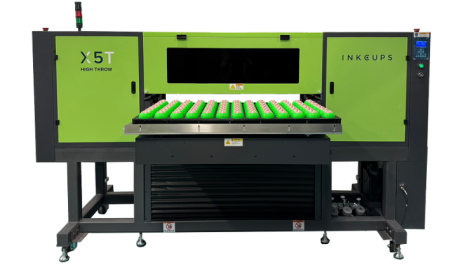
Engineered Printing Solutions (EPS) says manufacturers are increasingly investing in automated direct-to-object (DTO) printing systems as they look to address labour shortages, skills gaps and the need for more efficient production workflows.
The company has now surpassed 100 installations of its single-pass DTO systems, which it says reflects a wider shift in how manufacturers approach product decoration. Rather than focusing solely on print quality, businesses across sectors including plastics, packaging, medical, industrial and promotional products are placing greater emphasis on automation, standardisation and integration with wider manufacturing processes, said the company.
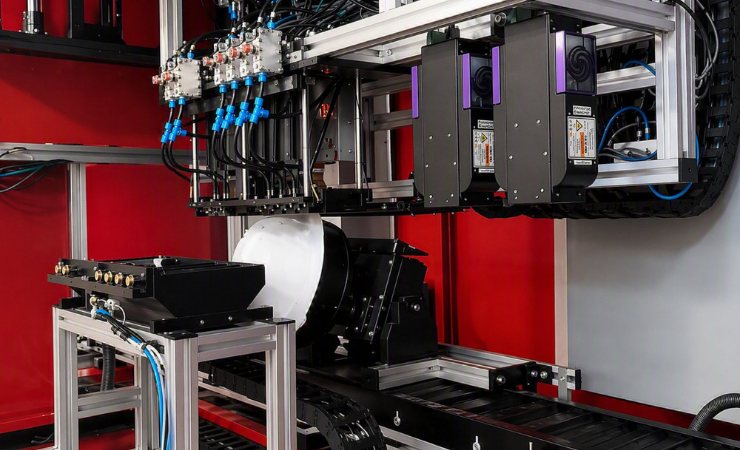
According to EPS, manufacturers are seeking to reduce manual labour, improve consistency between shifts and create more scalable production environments. The company says this is driving demand for production cells that combine digital printing with robotics, pretreatment, vision inspection and material handling.
EPS points to wider industry trends supporting this shift. It cites research from Plastics Machinery & Manufacturing showing that almost half of respondents to its 2025 annual survey said labour shortages had negatively affected their businesses, while 57% planned to invest in robots or other automation equipment during 2026.
The company also references U.S. Bureau of Labor Statistics data showing that plastics and rubber products manufacturing employed 695,800 people in April 2026, including 526,000 production and non-supervisory employees. EPS says labour costs reinforce the case for technologies that improve production efficiency, consistency and output.
“Manufacturers are not just looking for a better way to print. They are looking for a better way to produce,” said Kenneth Stack, executive chairman of EPS. “What we are seeing across markets is growing demand for decoration systems that reduce labor dependency, address skills challenges, and fit into a more automated, integrated manufacturing environment.”
EPS argues that labour, training, manual setup and production variability often contribute more to the true cost per part than consumables. It says the value of DTO lies not only in digital print capability but also in reducing labour requirements and creating more repeatable manufacturing processes. These themes are explored in the company’s recently published white paper, The Shift in Direct-to-Object Printing.
“We are seeing a progression from operator-assisted automation to semi-autonomous operation and ultimately lights-out decoration, where parts move through printing, curing, inspection, and tracking with minimal human intervention,” added Mr Stack. “As decoration becomes more integrated into manufacturing workflows, quality becomes more consistent, traceability improves, and changeovers become more recipe-driven and predictable. That is what is driving automation growth in DTO and interest in our printing systems.”