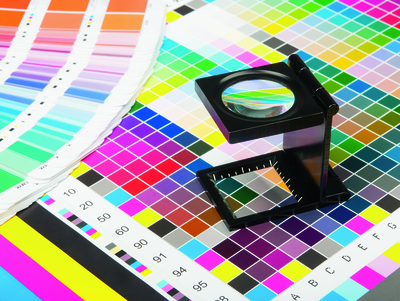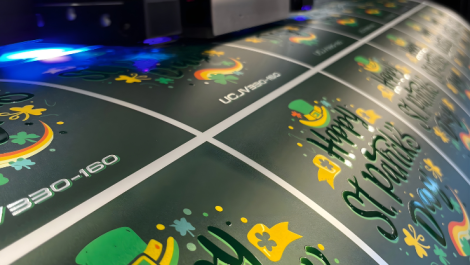
The ISO 12647-2 standard for process control in offset printing has been updated to make it suitable for digital presses, some of which are better at hitting the target than others, writes Laurel Brunner.
For many printers the idea of standards brings to mind but one thing: cost. They associate standards compliance with expensive consultants bent on confusing them and delivering more in the way of hefty bills than real results to the business.
It is an unfair association, but in cases where a consultant only half knows his stuff and does not communicate effectively, the association has probably been fairly earned. This may have impeded compliance to ISO 12647-2, the standard for process control in offset printing that is becoming popular with digital printers.
ISO 12647-2 has been around for more than fifteen years and yet in the UK only a handful of printers are fully compliant with it. These are leading printing companies who have seen beyond the implementation cost. They recognise that, properly followed, an ISO standard can help improve margins and expand their businesses. Although ISO 12647-2 is not written for digital printers, it is a useful benchmark for digital printing because there is basically no published standard dedicated to digital printing. Until there is, companies who print both digitally and offset can use ISO 12647-2 to help them achieve common colour appearance across print methods.
Print buyers who want a few hundred personalised documents for a special event can get them printed digitally, and trust that the long run version printed offset will look the same as far as colour quality goes. This is what ISO 12647-2 is all about and its implementation is not as tricky as people think. How difficult it is, depends on the state of your workflow and colour management, and whether or not you can tightly control devices such as monitors and proofing systems.
In the UK, compliance is actually relatively easy because the BPIF’s Certification Steering committee has done much of the heavy lifting. The BPIF’s certification scheme provides printers with a comprehensive guide to quality management and standards implementation. It is based on both ISO 12647-2 and ISO 9001, the standard for quality management systems used in all sorts of industries. The first version of the BPIF scheme was very closely aligned to ISO 12647-2. However, the steering committee has recently updated it to be suitable for a wider range of print production models, including digital printing. Printers who already have ISO 9001 will find it relatively straightforward to add the quality control bit as defined in ISO 12647-2.
Taking the plunge
Companies who choose to go down the ISO route usually make the decision in order to hang on to customers who demand 12647-2 compliance. Or perhaps the list of work they are asked to bid for has started to dwindle as ISO 12647-2 compliance becomes a requirement for a growing number of print buyers. Even if print buyers do not fully appreciate what it is, the requirement for 12647-2 compliance and certification helps them knock down RFP lists to a more manageable size.
Perhaps the most important part of the ISO 12647-2 certification decision is to take it seriously. There is no point chucking the standard at the pressman and telling him to get on with it. Achieving compliance requires root and branch commitment, investment in time, training, possibly new equipment and a willingness to test and make mistakes. That said, it is not so bad as it sounds because compliance is basically about quality control in the workflow, something a successful print business should be doing anyway. Colour data should already be managed so that printed colours look as you and your customers expect. Probably the biggest cost is the learning curve you go through in order to consistently achieve predictable results on press. The good news is that there is a premium for this work.
Digital application
Some digital presses are more likely to be able to achieve ISO 12647-2 targets than others. And some manufacturers are better able to support an ISO 12647-2 implementation than others. Fujifilm, for instance, has an in-depth appreciation of colour management and is committed to ensuring that its JetPress technology can achieve ISO targets. Your digital press should be able to print consistent half-tone dot patterns from 2% to 98% with a screen ruling of 150 – 200 lpi and a spot size of 20µm on coated paper. If it does not, ask your supplier why not. If they understand your question, you are halfway there. If not, it is time to get the consultants in. Make sure they know 100% of their stuff and can deliver competence and value.