The world is changing rapidly, and our customers are evolving. Is it time to change the way we sell to this new generation of buyers?
For an industry built on creativity, print has often struggled to market itself creatively. Conversations still start with sheet sizes, ink types, and colour channels. The specifications fill brochures, the print speeds make our heads spin, the machines are innovative and technically incredible. But while all of this attracted customers once upon a time, things are changing.

The next generation of buyers, entrepreneurs, creators, marketers, and digital natives, aren’t buying technology. They’re buying what technology enables: individuality, emotion, connection. They don’t want to know how many colours a press can print. They want to know how it can help them make their brand tangible. They want to know how it can make their customers feel.
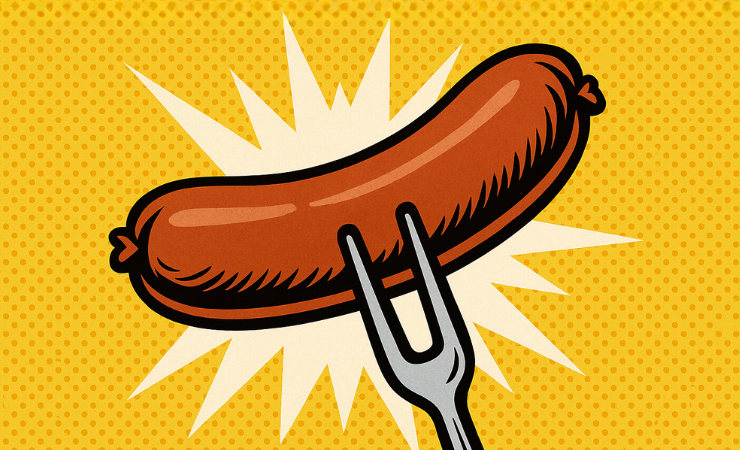
This is the difference between selling the sausage and selling the sizzle. An idea coined by marketer Elmer Wheeler in the 1930s, “selling the sizzle” is as much a mindset shift as it is a marketing strategy. And it is increasingly being adopted across the print industry as it attempts to speak to audiences who live, buy, and think in entirely new ways.
From products to possibilities
Marine Kerivel-Brown, global director of marketing at Duplo International, says this is exactly the type of approach she wanted to adopt when she joined the company.
“One of the reasons I joined Duplo was to transform the conversation that we have when it comes down to print – away from the machine or the solution,” she explains. “What does it enable a printer to deliver, and what’s in it for a brand? There is definitely a shift from selling print to selling possibilities.”
This is an important shift. Selling possibilities focuses on outcome, the brand story, the creative potential, the emotional impact. “The machine is the enabler,” says Ms Kerivel-Brown. “But what you need to showcase is what it helps a printer to achieve.”
This changing language mirrors a deeper change in culture. Today’s print buyer is as likely to be a TikTok seller or start up designer as a traditional marketing manager. They think in terms of audience experience, not specifications. The challenge, and the opportunity for PSPs and OEMs alike, is to bridge that divide, using creative storytelling to make print feel exciting, relevant, and alive.
Rebranding an old medium
Everyone in the industry understands that print is one of the most powerful, sensory communication tools in existence. Yet too often it is positioned as the analogue cousin to digital media rather than its natural complement.
“Print still struggles to remove itself from this old-fashioned tag,” says Ms Kerivel Brown. “We need to position it as an amazing and powerful platform to engage with audiences. We just haven’t yet acquired the skills to talk about it in a way that really gives it the space it needs.”
“Everything starts and ends with the customer. If you understand what resonates with them, you’ll deliver the story that engages them.” – Marine Kerivel-Brown, Duplo international
That narrative gap has real consequences. When print is seen as static, slow, or purely functional, it attracts fewer young professionals, fewer designers, and fewer clients willing to invest in its potential. But when it’s presented as something experiential – the physical expression of brand identity – it suddenly becomes the most human medium in the mix.
Andy Lydiatt, strategic growth director at Pureprint Group, sees the change in perspectives happening already.
“The modern consumer is buying a different type of product that’s enabled by printers,” he explains. “They’re not necessarily buying newspapers or brochures. They’re buying customised hoodies, water bottles, posters. Things that reflect their lives.”
Today print goes a long way beyond brochures and bank statements. From customised apparel to luxurious packaging, bespoke merchandise to personalised décor, print’s footprint is everywhere. But the story we tell about it has yet to catch up.
“We’ve spent so many years competing with digital as a channel rather than focusing on the positive aspects of what we produce,” says Mr Lydiatt. “There’s a lot of value in craft and tradition, but it’s about making that relevant – helping people see print as cool, creative, and part of a connected experience.”
The confidence to stop apologising
For all its creative power, print still tends to speak about itself like a fading heritage craft rather than a modern, connected medium. That attitude is part of the problem, says Colin Sinclair McDermott, founder of the Online Print Coach and print marketing expert. He points to print’s ubiquity as proof of its validity in the modern world.
“I don’t think people really appreciate just how much print is around us,” he says. “So why are we defending this all the time? Let’s start talking more positively about what we do.”
Ms Kerivel-Brown agrees: “We have to stop talking about or apologising for the print industry. It’s always a defensive dialogue: ‘Print is not dead.’ Of course it’s not dead! We need to stop answering to that criticism and start telling the story that we choose to tell.”

“Let’s start talking more positively what we do we do.” – Colin Sinclair McDermott, The Online Print Coach
That story, she argues, should be one of authority and imagination, not survival. Rather than prove its relevance, print should project its power. The tactile connection between a brand and its audience, the emotional charge of something beautifully produced, the permanence of a message you can hold. All things that digital media is unable to replicate.
The real challenge, then, is cultural. To sell the sizzle, print needs to believe in the sizzle.
Marketing as a growth engine
Inside print businesses, that change begins with how marketing itself is viewed. For too long, it has been a secondary function – a nice-to-have partner to sales. But from where Andy Lydiatt is standing, that perspective is changing fast.
“Historically, the role of marketing within a PSP would have started and ended with writing copy, doing some advertising, and some admin,” he says. “Now it’s strategically so important it’s almost more important than the salesperson.”
Marketing is becoming the engine that drives demand. It shapes what a company says, how it shows up online, and how it positions itself to customers. Colin Sinclair McDermott agrees that this shift is long overdue.
“There are still a lot of people out there marketing with a one-size-fits-all approach,” he says. “When you start talking to the audience you’re trying to reach with stuff that resonates with them – the transformation you’re bringing to them as a PSP – your message hits home a lot quicker. You get a greater return on investment for your time and efforts.”
That evolution calls for a new mindset. Rather than simply “promoting print,” PSPs must communicate why print matters in a world saturated with screens. The companies that do this well are not just selling print; they are selling meaning. They understand their customers deeply, their pain points, their ambitions, their audiences.
As Ms Kerivel-Brown puts it: “Everything starts and ends with the customer. If you understand what resonates with them, you’ll deliver the story that engages them.”
For many PSPs, this is the real “sizzle.” It is not just beautiful output, but the expertise that transforms a campaign or brand. The more you help customers see what is possible, the more value you create, and the less you have to compete on price.
Speaking human, and being in the right place
When it comes to communication the print industry has its own dialect. An alphabet soup of RIPs, CMYK, GSM, and DPI. But this jargon can become a barrier to connection.
“We’re an industry that kills ourselves with buzzwords,” says Mr Lydiatt. “We alienate people. We might know what we mean, but others don’t. Then we wonder why people don’t join us on that journey.”
To sell to modern buyers, the industry must learn to speak in a human way again. With enthusiasm, clarity, and authenticity.

“Speak with enthusiasm and be as authentic as you can. It’s amazing how good things come out of honest, enthusiastic conversations.” – Andy Lydiatt, PurePrint Group
“Keep it simple,” says Mr Lydiatt. “Speak with enthusiasm and be as authentic as you can. It’s amazing how good things come out of honest, enthusiastic conversations.”
Clear communication, active listening, and putting yourself where the next generation operates can mean the difference between connecting with new customers and missing huge opportunities.
“You’d be lucky if 10% of PSPs are using platforms like TikTok,” says Mr McDermott. “I’m always encouraging clients to run short behind-the-scenes clips – show what’s going on in the business. The engagement we got on those posts was huge. But if we want to attract younger generations, we must be on the platforms where they hang out.”
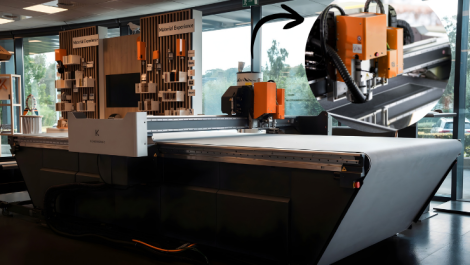
This doesn’t mean abandoning professionalism. It means embracing storytelling. Print is visual, tactile, and cinematic – perfect for storytelling. A 10-second reel showing a foiled invitation or a die-cutter in motion communicates magic far better than a brochure ever could. It also involves potential customers in the process more than a brochure ever could.
A shared story
For Ms Kerivel-Brown, the next evolution lies in collaboration. “Everyone is trying lots of different things,” she says. “But no one is actually doing anything together. The print industry doesn’t have that solid voice yet that enables us to start that shift at a wider level.”
A shared campaign that unites PSPs, OEMs, and suppliers around a confident, contemporary message about print’s sensory and creative power, could change perception faster than any single marketing initiative. But even before that happens, the individual shifts matter: the conversations, the confidence, the new tone.
“Even if we haven’t found the right place yet,” she says. “The fact that these conversations are happening shows there’s a shift taking place. There’s a consciousness that we need to evolve.”
So, what, ultimately, is the sizzle? Is it that spark of emotion when a customer holds something real? Is it that feeling we experience when something that connects?
“Sometimes the printed box, card, or label is the only tangible link between a brand and its end user,” says Ms Kerivel Brown. “In a very digitally driven world, print is that trusted physical experience that creates connection.”
Print doesn’t need to reinvent itself to sell that. It just needs to tell its story with the same confidence and creativity it gives to every brand it serves.
Because the truth is simple: people don’t buy print. They buy the way print makes them feel.
Check out the first Digital Printer Podcast: Selling the Sizzle, which features all those in this feature. You can watch/listen to it on YouTube (below), Spotify, or Apple Music.