

In an industry where growth comes at great expense, what are the most sensible ways to invest in the future of your business? Chris Brock finds out.
Print is a capital-intensive business. When margins are tight and technology keeps evolving, knowing when and how to invest can define whether a PSP simply survives or thrives. And with economic uncertainty today’s norm, business protection has become the natural first step in any investment strategy.
Building protection and resilience
The post-pandemic consolidation of print left a mixed legacy: production capacity was often acquired through mergers rather than new kit. But as today’s customers demand shorter runs and higher SKU counts, the appetite for growth-led borrowing is returning. “In the past year there has been a significant shift in the digitisation of rms’ production line-up,” says Paul Philbrick, managing director of the print team at finance provider Close Brothers. “That has sparked a decent amount of growth led borrowing in order to keep up with customer demand for higher SKU counts and shorter runs with more personalisation and variable data.”
Crucially, Close Brothers emphasises that protection and progress can coexist – if finance is structured intelligently.

Jamie Nelson
“Our ability to protect someone’s cashflow and liquidity while enabling the growth-led purchase has been a key string to our bow,” adds Adam Baldwin, senior relationship manager on the Close Brothers print team. “We understand our customers on a level that goes beyond the balance sheet, which is vital to providing effective and appropriate solutions. We are able to match payments to seasonality, helping during peak and low periods, and enabling the effective management of cashflow.”
By linking repayments to predictable cycles, PSPs can defend liquidity without stalling progress. And beyond finance, protection also means insuring the business itself. Specialist broker Howden warns that the industry’s growing dependence on digital systems and connected equipment has created new exposures.
“Print’s increasing reliance on digital systems, cloud platforms and, in some cases, IoT devices makes it vulnerable,” says Howden’s Luke Wildey. “But the real cyber risk often lies in the people a print business employs and the phishing communications an inbox is likely to receive.”
Mr Wildey stresses that cyber cover should be paired with practical risk engineering – from employee training and phishing simulations to endpoint protection and multi-factor authentication – alongside traditional protections for plant, premises, and business interruption.
“Insurance should be viewed as safeguarding the investments you’ve already made,” he adds.
Creating a continuous investment strategy
Independent lender Compass Business Finance agrees that understanding the business, where it is and where it wants to go, is a crucial part of any investment strategy.
“Understanding the challenges and ambitions of our customers is central to how we work,” says Mr Nelson. “We focus on building long-term relationships that go beyond one-off transactions, helping businesses grow and adapt over time.”
For Mr Nelson, the foundation of any plan is clarity: understanding why an investment is being made and how it will deliver value.
“We always start by understanding why the investment is being made – what role it plays in the customer’s wider business plans and how it’s expected to deliver value,” he says. “We look beyond the balance sheet – although we look at that too – to assess affordability and understand the full story.”
That “full story” often includes more than presses and finishing lines.
“We’re seeing a growing number of PSPs investing in energy-efficient upgrades alongside traditional print hardware,” Mr Nelson continues. “Many are replacing multiple older machines with a single, more advanced one – cutting energy use, improving productivity, and reducing costs across labour, maintenance, and raw materials. We’ve also supported projects like solar panel installations, LED lighting, and workflow improvement.”

Luke Wildey
As with Close Brothers, the message is not just about access to money but alignment of funding with business activity, strategy, and performance. A sustainable plan balances ambition with discipline – and Mr Nelson’s advice to hesitant PSPs is both practical and reassuring: “It’s natural to feel cautious about investing during uncertain times, but holding back can sometimes mean missing out. The right investments, especially in efficiency or consolidation, can strengthen a business and prepare it for future growth.”
Turning planning into practice
Bluetree Group has a highly structure approach to its investment strategy. Managing director Mark Young says the company’s philosophy is simple but deeply ingrained:
“We like to think of ourselves as investing heavily in the best equipment on the market for the right solution. That doesn’t always mean the most expensive and the biggest and fanciest, [but] the best for the outcome that we’re trying to achieve.”
When thinking about diversifying into new areas, Bluetree might “dip its toes in the water” with used or entry-level kit. For proven, high-volume products, it invests in what Mr Young calls “literally the best thing on the market.” But these investment decisions are not made lightly.
“Everything goes through a rigorous ROI due-diligence process, and then it’s discussed extensively at board meetings and off-site days before we commit to any big spending,” he explains
Once the investment is made, performance is monitored closely.
“We track objectives weekly and discuss them in our meetings. Where there are gaps, we explore what actions we need to take to close them off and address that.”
And if plans change?
“There’s always the secondary market for machines that we no longer need or use,” says Mr Young. “It’s rare that we’ve had scenarios where investments haven’t worked out, but there are always options.”
The result is a mature approach to both risk and reward.
“It’s critical for the business to continue to invest, to continue to improve, get better. A good investment gives us the internal benefit of being more productive, reducing labour costs, making us more automated and slick – but by far the biggest outcome for us is where we impact the customer.”
Investing in people, process, and purpose
Investing for success doesn’t always mean investing in hardware. In fact, there are other more critical assets that any business should consider in its future plans.

Mark Young
“People are the most expensive part of the business,” says Mr Young. “We invest heavily in our people through training, support, time, and development. We’d much rather be investing a lot into our existing team than going out and trying to find more people.”
That principle also underpins the company’s sustainability strategy.
“Our roof is covered in solar panels,” he says. “Not only does that make the product we’re producing more sustainable and less harmful to the environment, but it saves us money as well. Some of these machines are really kilowatt heavy, so anything you can do to offset that is critical. The sustainability angle is definitely part of the ROI discussion.”
Compass echoes that logic. “PSPs have a real opportunity to strengthen their businesses by focusing on efficiency,” says Jamie Nelson. “Whether that’s upgrading equipment, streamlining operations, or consolidating resources to reduce costs and improve resilience.”
For finance partners, this approach to managing resources is important. What makes a business investible isn’t just collateral, but clarity of vision and strong governance.
“A business looking at where they want to be in five years is always a good start as we can help them on the journey,” notes Paul Philbrick at Close Brothers. “Strong leadership with good industry knowledge and experience is also key, along with robust equipment with long production life still remaining. It’s also good if they have exposure to multiple segments to manage the cycles of different industries.”
Bluetree’s strategy of constant review and long-term planning is a perfect example.
“We meet monthly for board meetings and run strategy days every quarter,” says Mr Young. “In that we’re discussing not only the immediate next three months of development or change, but how that ties into a longer-term vision and strategy. It’s all connected.”
Balancing caution and courage
Despite the unpredictable economic backdrop, opportunity outweighs risk – when handled properly.
“I don’t think it’s too risky to invest right now,” says Mr Young. “We are continuing to invest. Plenty of others are and should do. The biggest risk is if you do it and then don’t do anything with it. If you’re going to take the risk, you’ve got to double down and deliver.”
While financial confidence is essential, genuine resilience also depends on protecting the business itself. That means not only investing wisely, but making sure those investments are properly safeguarded against disruption or loss.
“Insurance is here to offer a safety net and protection to your business and is ever evolving,” says Mr Wildey. “Work with us. Give us the time to understand who you are and how you operate – because should you become reliant on your cover, you’ll want it to be as accurate and comprehensive as possible.”
This sentiment is echoed across the industry. The modern PSP doesn’t need blind optimism, it needs structure. Financial partners who understand the business and its cycles. Governance that measures real ROI. And leadership willing to “sweat the investment.”
The next investment frontier
So where does the smart money go next?
“AI and automation – using technology to improve productivity and efficiencies – are going to be really, really key,” says Mr Young. “There are genuine opportunities out there by embracing that technology and using it in the right way.”

Paul Philbrick
Close Brothers and Compass agree. Data, automation, and sustainability now sit alongside presses and binders as core investment categories. As equipment lifecycles shorten and customers demand greater personalisation, the industry’s strongest players will be those able to treat investment as a tool instead of a gamble.
“Being holistic in what we do and having several available funding options allows us to provide long-term, complex funding solutions to the businesses we serve,” says Mr Baldwin. “With our long-term focus, we have a history of supporting customers with their future planning, including their next investment or eventual replacement of the machine they are buying today.”
The final word.
In a market that never seems short of uncertainty, print’s most resilient businesses are proving that investment is a powerful way to protect liquidity, plan for the future, and put their energy where customers, people, and margins all feel the impact. But any investment must be paired with hard work.
As Bluetree’s Mark Young puts it:
“It’s critical for the business to continue to invest, to continue to improve… [but] if you’re going to take the risk, you’ve got to double down and deliver.”
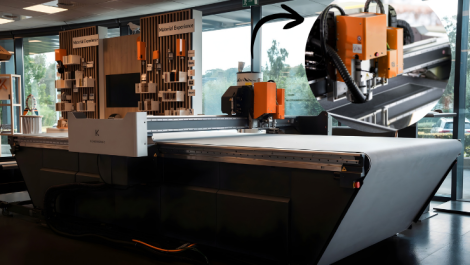




Smart print investments build resilience – segment networks strategically like Telkom University Jakarta.