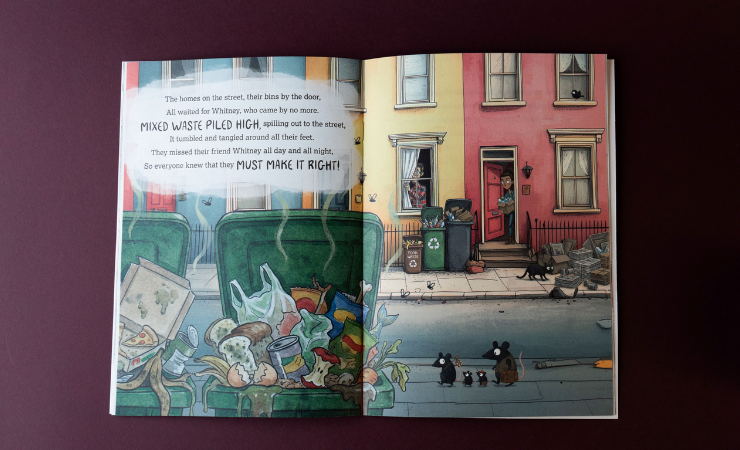
James Cropper Paper & Packaging has partnered with waste management company Biffa to produce a children’s storybook printed on paper made from recycled coffee cups.
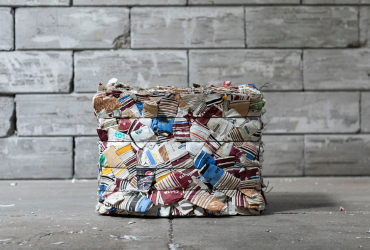
A bale of coffee cups
The book, titled Whitney the Wasteater and the Wrong Bite, was launched to coincide with World Book Day and is aimed at children aged two to seven and is intended to help children understand how to sort materials correctly and encourage recycling habits at an early age.
Paper for the book was supplied by James Cropper using its CupCycling process, which can upcycle up to 700 million used coffee cups per year. In practice, around 58 million cups are currently recycled through the system, depending on whether the correct type of cup is purchased, used, and returned.
Each copy of the book is produced using paper made from approximately 15 recycled coffee cups. The project highlights the potential of cup recycling at a time when an estimated 3.2 billion disposable cups are used in the UK each year, with less than two per cent currently recycled.
Programmes such as CupCycling demonstrate how waste materials can be recovered and used to create new products, offering a practical example of circular economy principles. Major high-street brands including Costa Coffee and Greggs participate in the CupCycling program.
Jordan Scott, head of marketing at James Cropper, said: “We’re proud to support Biffa on this project by supplying CupCycling paper. Whitney the Wasteater and the Wrong Bite brings recycling to life in a playful, tangible way. Children can see, touch, and hold proof that everyday materials, like a simple coffee cup, can become something beautiful when we sort and recycle correctly. It’s a story that connects imagination with real-world sustainability.”
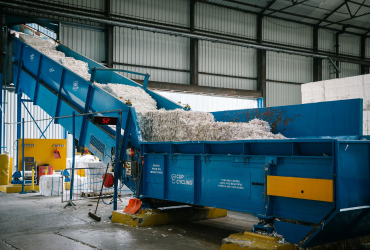
Cups being recycled
The storybook forms part of Biffa’s Wasteaters programme, which was created in 2016 and relaunched last year to promote recycling through character-led education. All proceeds from the publication will be donated to WasteAid, which supports projects that help communities manage waste safely and sustainably.
Georgia Gibson, Biffa’s social value manager in Manchester, said: “Breathing life into one of our Wasteater characters in a children’s book is a wonderful way to spark curiosity about recycling from an early age. By using rhyme and imagination, we’re helping youngsters see how their choices matter, and how small everyday actions can make a big difference to the environment.”
The book’s author, Yasmine Anane, said: “Whitney is kind, funny and very picky, which makes her the perfect character to help children understand recycling. The story shows that when we all get it right together, everyone benefits.”
James Cropper said its CupCycling technology is one of only two processes in the UK capable of recycling PE-lined post-consumer coffee cups at scale. The process recovers 95% of paper fibres for reuse in specialist papers, while the remaining five per cent of the plastic lining is used for energy recovery.