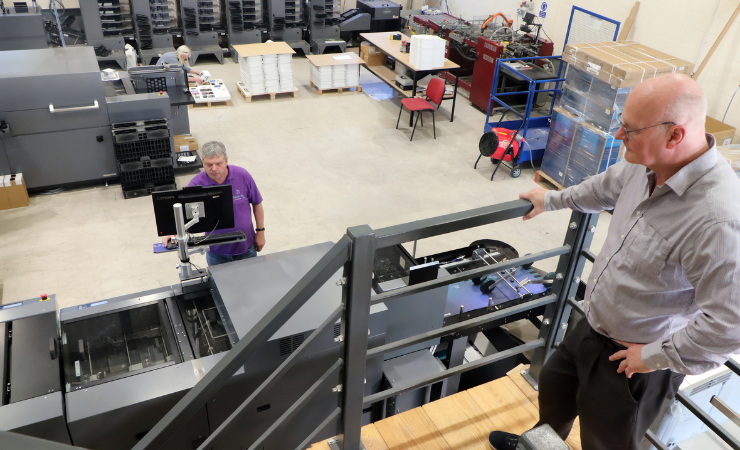
Leicester-based trade printer Flexpress has replaced a traditional platen and cylinder machine with a Duplo DSM-1000 B2 die-cutter, as part of a wider investment programme across finishing, digital and litho production.
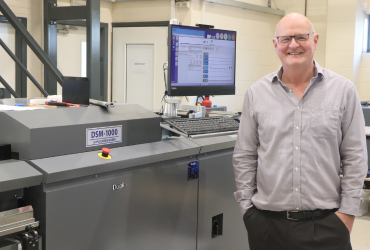
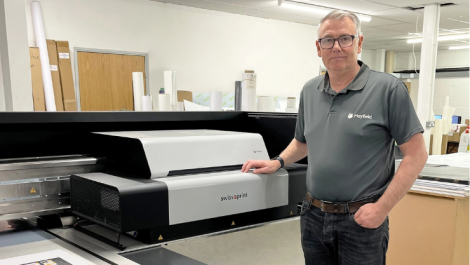
Steve Wenlock with the Duplo DSM-1000
Managing director Steve Wenlock said the decision reflected a shift in how the company approaches efficiency and capacity. “You can pick up a refurbished cylinder or platen machine for £20,000–£25,000. Then you look at something like the DSM-1000 and think, that’s a big jump. But the benefit is not the machine itself. It is what it allows you to do in the same time.”
Mr Wenlock said die-cutting had previously been a bottleneck for the business. “It dictated what we could and could not take on,” he said. “Now, once a job is set, especially repeat work like presentation folders, we are changing over in minutes. Instead of spending time on makeready, we are running jobs.”
The new system has also enabled Flexpress to consider products it would not previously have prioritised, including bottle boxes, ticket wallets and key card holders. Mr Wenlock added that existing products, such as cut-to-shape fliers, had become cheaper for customers.
Flexpress has also invested in Duplo’s DuSense DDC-8000 digital embellishment system, enabling it to add raised spot UV and foil to printed products. “Adding spot UV and foil allows us to take something ordinary and turn it into something that really connects with the end user,” said Mr Wenlock.
Alongside its finishing upgrades, Flexpress has continued to invest in HP Indigo digital technology and a new RMGT 970PF-8 long perfector press. The company has also installed what is believed to be one of the largest configurations of Duplo’s DBM-700 bookletmaking system globally.
Martyn Train, managing director of Duplo UK, said, “Flexpress is a great example of a company that understands how to move forward, and decisively. This is not about replacing traditional processes for the sake of it. It is about creating a production environment that is more resilient, more scalable, more automated and better equipped to handle the ever increasing demands of print buyers and consumers.”
Mr Wenlock concluded, “Yes, there is disruption. Yes, there is investment. But you either move forward and adapt, or you get left behind.”