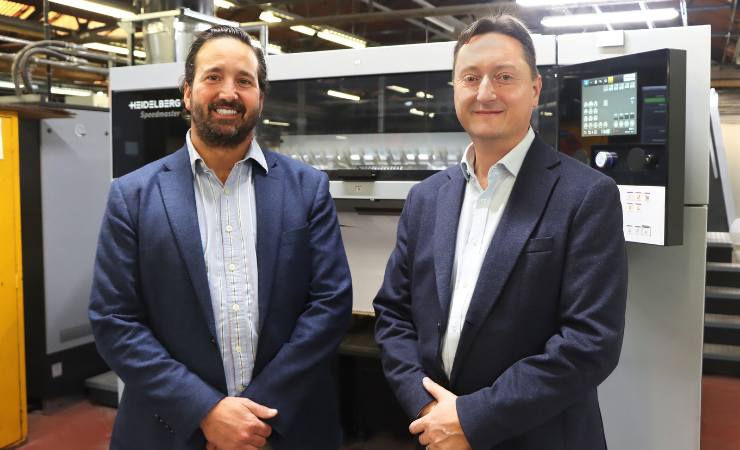
The Page Bros Group, based in Norwich, UK, has invested in a new Speedmaster XL 106-5+L printing press from Heidelberg as part of a wider three-year investment programme valued at £7 million. The new press replaces an older Speedmaster CX 102 and forms part of the company’s plans to support future growth.
Page Bros provides premedia, printing and fulfillment services to publishing and commercial customers in the UK and internationally, including direct mail, security printing and accessible formats. A significant proportion of the investment programme is focused on renewing production equipment to improve efficiency and capacity.
The Speedmaster XL 106 is integrated with Heidelberg’s Prinect workflow system, which is designed to support faster turnaround times, consistent print quality and greater production flexibility. The company said the new press also consumes less energy and generates less waste, aligning with its sustainability objectives. Page Bros also operates a Stahlfolder TH 82-P, which supports post-press operations.
“With the installation of the new Speedmaster XL 106, Heidelberg is giving Page Bros’ production workflow a significant boost in automation and once again demonstrating its expertise as a system integrator,” said Dr David Schmedding, chief technology and sales officer at Heidelberg. “This enables our customers to continue growing profitably and increase their competitiveness.”
CEO of Page Bros Alex Tuya commented: “The Speedmaster XL 106 offers us maximum speed, flexibility, and quality, enabling us to take on larger, more complex projects and deliver them faster and more sustainably than before. This investment is not only about meeting the needs of our customers today, but also about anticipating the demands of tomorrow and giving us a competitive edge.”
The Speedmaster XL 106 is part of Heidelberg’s Peak Performance Generation, which was launched at drupa 2024. The platform is designed to increase productivity, reduce environmental impact and support consistent output through automation and process control.
According to Heidelberg, the automation features of the press can reduce makeready times by up to 40 percent, while inline inspection and control systems help to limit waste at the start of production. The company said this allows higher output per shift and improved turnaround times for customer orders.
“Our operators will benefit from modern automation and user-friendly control systems, making their work more efficient and less physically demanding,” said Spencer Armes, chief operating officer at Page Bros. “For our customers, this investment represents our commitment to quality, reliability, and service, as well as the assurance of having a printing partner who is ready to grow with them.”
Mr Tuya concluded: “This investment will help future-proof our operations and remain agile and competitive in a dynamic and ever-evolving market.”