
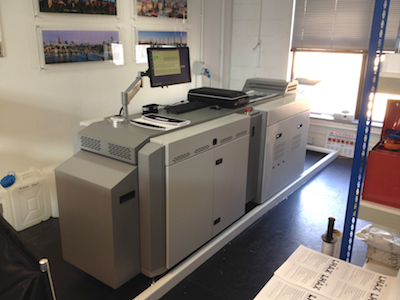
Clicks Print Limited, the Central London based printer, has ordered a second LumeJet S200 printer, less than six months after installing its first unit.
The company has made the investment to meet the increasing demand for the ultra high quality output has driven the need for additional capacity.
Following the purchase of its first S200 the company has seen a huge growth in demand from its existing client base. In addition it has been steadily building new, high margin, revenue streams from clients looking to take advantage of the unit’s ability to deliver differentiated and value-adding marketing and point of sale materials.
Alan Rigglesford, managing director, said, ‘The LumeJet’s high quality output has been extremely well received by our customers. As one of the early adopters of this cutting edge photonic print technology, we are seeing a diverse range of applications from customers who want to differentiate their brands in an increasingly competitive marketplace. The LumeJet ‘s output compliments our wide range of large and small format digital printers and allows us to offer a very full range of print services regardless of run length, quality and cost.’
LumeJet’s commercial director, Miles Bentley, said, ‘It’s extremely encouraging to see that, after only a short time of using an integrated sales and marketing approach, Clicks has gained a significant business advantage from adopting the LumeJet technology.’
The LumeJet S200 is tailored towards a variety of small format applications with a print size a roll-fed 305 mm x 1000 mm print combined with the ultra-high-quality photonic output. It is designed for producing A3 landscape layflat books, panoramas, professional portfolios, architectural presentations and pitch books, exclusive property and real estate promotions, designer look books, luxury brands, corporate publications, wedding albums, fine art, exhibition printing, book jackets and personal publishing.
‘The LumeJet ‘s unrivalled output quality also liberates design professionals from any concern about optimum output resolution for text or photographic images – it will effectively print anything,’ said Mr Rigglesford. ‘This means that the traditional restrictions of designing for print can be cast aside in the design process allowing for a truly unrestricted creative approach to meeting a customer’s vision and requirements in a compelling and innovative way.’