UPM has announced plans to form a joint venture with Sappi involving the companies’ graphic paper operations, as part of a broader effort to reshape its business portfolio. The proposed venture, which remains subject to regulatory approval and closing conditions, is expected to be completed by the end of 2026.
According to UPM, the transaction would significantly reduce its exposure to the declining European and North American graphic paper markets. The company said the move would place its remaining operations on a stronger growth trajectory and improve overall financial performance. UPM intends to focus on businesses centred on renewable fibres, advanced materials and decarbonisation technologies.
UPM president and CEO Massimo Reynaudo said the announcement marks another step in a shift that has taken place over the past decade. “Building on our strong heritage in graphic papers, UPM has over the past decade successfully transformed from a European paper company into a leading global company with a broad portfolio of material solutions,” he said. “With the planned joint venture announced today, we would start a new era in our transformation.”
Mr Reynaudo added that the company has expanded its activity in sectors that align with demand for renewable materials and lower-emission technologies. “We have built an attractive business portfolio that meets the growing need for renewable materials,” he said. “We have scaled up our growth businesses and entered promising new businesses.”
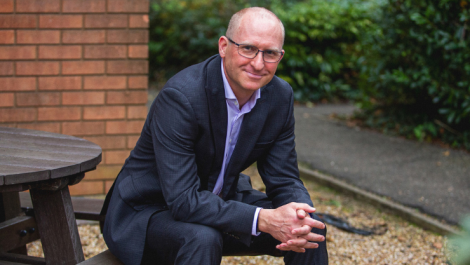
Steve Binnie, Sappi CEO, commented: “Sappi is very excited by the potential that this joint venture, if approved, will bring. We have been searching for a solution to secure a long-term profitable future for our European business. This innovative partnership with UPM will deliver a focused business bringing the best assets and people together to create a strong future which can ensure sustained support for our customers and can also ensure that the European manufacturing base is protected.”
He continued: “The proposed joint venture provides a unique opportunity to unlock value for our shareholders. The transaction delivers on Sappi’s Thrive strategy to reduce our direct exposure to the graphic paper segment and enables us to reposition our portfolio towards higher-growth, higher value segments. Sappi’s direct sales volume exposure to the graphic paper segment will decrease to below 20% after the transaction is completed and our 50% shareholding in the joint venture is anticipated to generate more value than the standalone Sappi graphic paper business.
If the joint venture proceeds, UPM’s portfolio would concentrate on three operating areas: renewable fibres, advanced materials, and decarbonisation solutions.
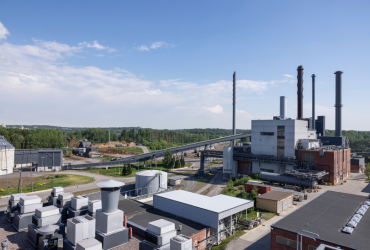
Sappi’s Kirkniemi mill
The renewable fibres segment includes UPM’s pulp and timber operations. The company says the division is structured around two regional platforms: “Fibres South,” which includes pulp mills, plantations and logistics in the Southern Hemisphere, and “Fibres North,” which focuses on softwood pulp production. UPM states that both platforms are positioned to improve capital efficiency and maintain stable cash generation.
The advanced materials segment includes UPM Adhesive Materials, which produces self-adhesive papers and films, and UPM Specialty Papers, which supplies materials for packaging, labelling and industrial uses. These businesses serve global markets and, according to UPM, require comparatively lower investment than some of the company’s other divisions.
UPM’s decarbonisation-related businesses include its energy and biorefining divisions. UPM Energy operates CO2-free power generation assets, including nuclear and hydropower facilities. UPM Biorefining produces advanced biofuels and bio-based chemicals, with its biorefinery in Leuna, Germany, scheduled to begin initial customer deliveries in late 2025.
Separately, UPM Plywood remains under strategic review. The company is evaluating options intended to support long-term development of the division, with the review expected to conclude by the end of 2026. Until then, UPM says it will continue to operate the plywood and communication paper businesses normally.
In the near term, UPM plans to continue focusing on cost competitiveness, improving capital efficiency and maintaining a strong balance sheet. The company says it intends to allocate investment selectively while continuing to provide returns to shareholders.